
Identifying your boxes
 Image generated with Nano Banana
An identification SOP, from packaging to label: so anyone can tell what’s in the box
Products vary enormously: very small or larger, individually packaged, several in the same box, sometimes with no packaging or identification at all. Working with clients, I’ve seen products with no bag, no SKU (the internal code that identifies each product), no barcode, duplicate identifiers, products to assemble where the right component has to be matched to the right product, and variations that look nearly identical but aren’t the same product. No judgment: these systems work internally, and things get complicated once you go outside, with suppliers, 3PLs (companies that store and ship for you), and carriers. The goal is to sell: you live with it, and you still aim for the ideal.
Mistakes are easy, even with a simple system: you deliver to the right street but the wrong door, or you reach into the wrong bin. My principle: make the job simpler for the person who receives the information, so they don’t have to ask themselves questions. The procedure is a guide: processes vary from one business to the next, and I adapt it to your operations.
Author: François Paradis, assisted by AI
Reading time: six minutes, plus two for the appendices. One page.
The key steps
- Secure the product
- The ideal label
- Identify every packaging level
- Take control at the source
The steps in detail
Image generated with Nano BananaSecure the product
A poorly protected product breaks on the way: packaging safety comes before identification. The packaging has to protect against breakage in transit, and adapt to the weather when the product is sensitive to it: stay cool, not freeze, not melt. It has to hold up over time and be tested. Also think beyond the ideal delivery: the package may be combined with other products in the same box, or shipped in a bubble mailer. Bottles (the cap can pop open on impact) and especially tubes (easy to crush when they travel with other items) need attention. Ideally, the product can handle shipping on its own, without excessive overpacking.
 Image generated with Nano Banana
The ideal label
The label lets anyone, at any step, tell at a glance what’s inside. It shows the product name, the SKU clearly visible and large (the unique identifier that means something to you, easy to spot), the specs that set the product apart from similar SKUs (colour, variant), the scannable barcode, normally the UPC, and the quantity. Dimensions and weight are common but optional. Depending on the product, other identifiers are added: dangerous goods (for example batteries, with quantity and volume limits to confirm against the regulations), “do not separate” for lots, fragile, urgent. A short note, a sticker, or a card in the box is a choice, often to save time and money.
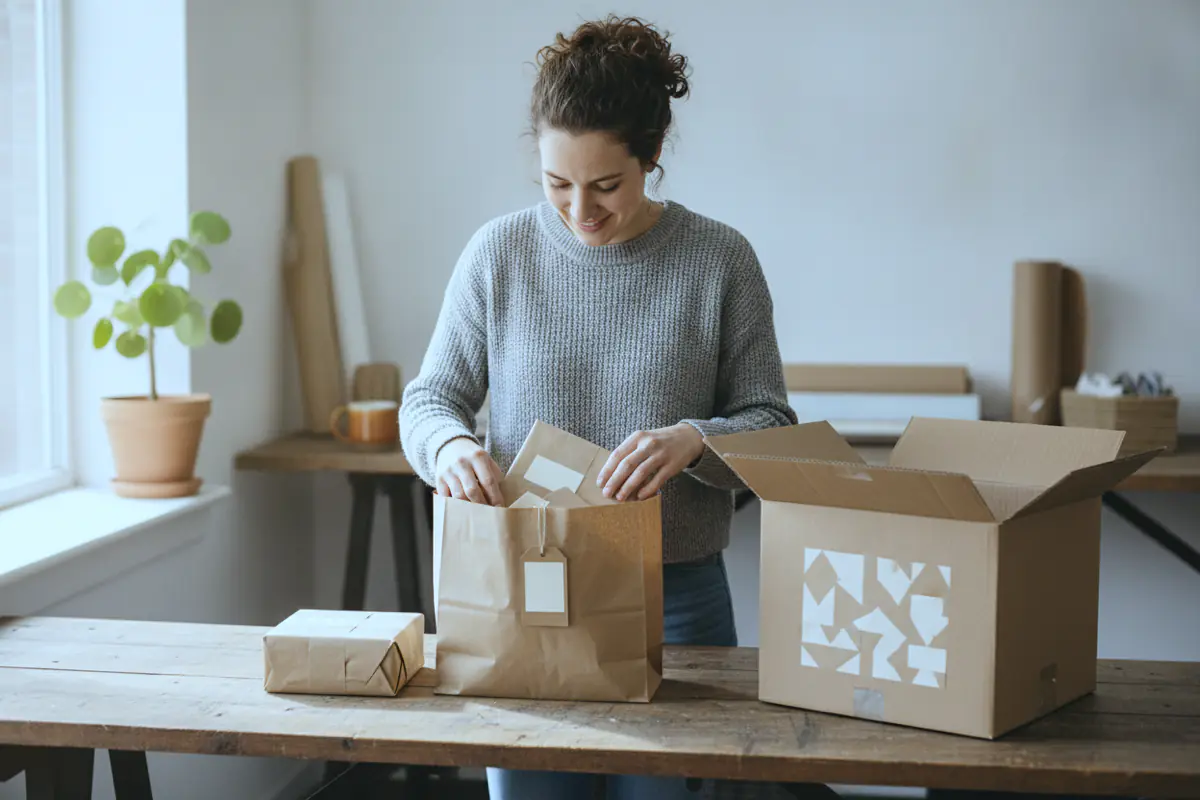 Image generated with Nano Banana
Identify every packaging level
What matters is sellable quantities: without identification at every level, confusion sets in. You identify the sellable product (the unit), the intermediate grouping (a bag, a sub-box, an “inner pack”), and the shipping box (case, pallet). For example: small packs of pencils, each one identified, a bag of 100 packs, a box holding several bags. The trap to avoid: putting the product’s SKU on the box. A scan then counts a single unit when there may be ten, the inventory is thrown off, and you can end up selling ten products for the price of one. My preferred solution: a separate barcode for each grouping level. When it’s scanned, the system knows it’s a case, an inner pack, or a pallet, so a precise quantity. Counting is faster and safer.
 Image generated with Nano Banana
Take control at the source
Manufacturers can do anything, but without instructions, they do it their own way, whatever is easiest for them. So you need to define your needs based on your own operations and take control. Since you’re not a graphic designer, you often end up with a makeshift label. The idea is to generate your own labels from a database (barcodes and the required information), with your company logo, then supply them to your suppliers, who then identify the boxes correctly right at the source. A tool for this still has to be built: let’s talk about it when we meet.
Appendix: the UPC code and GS1
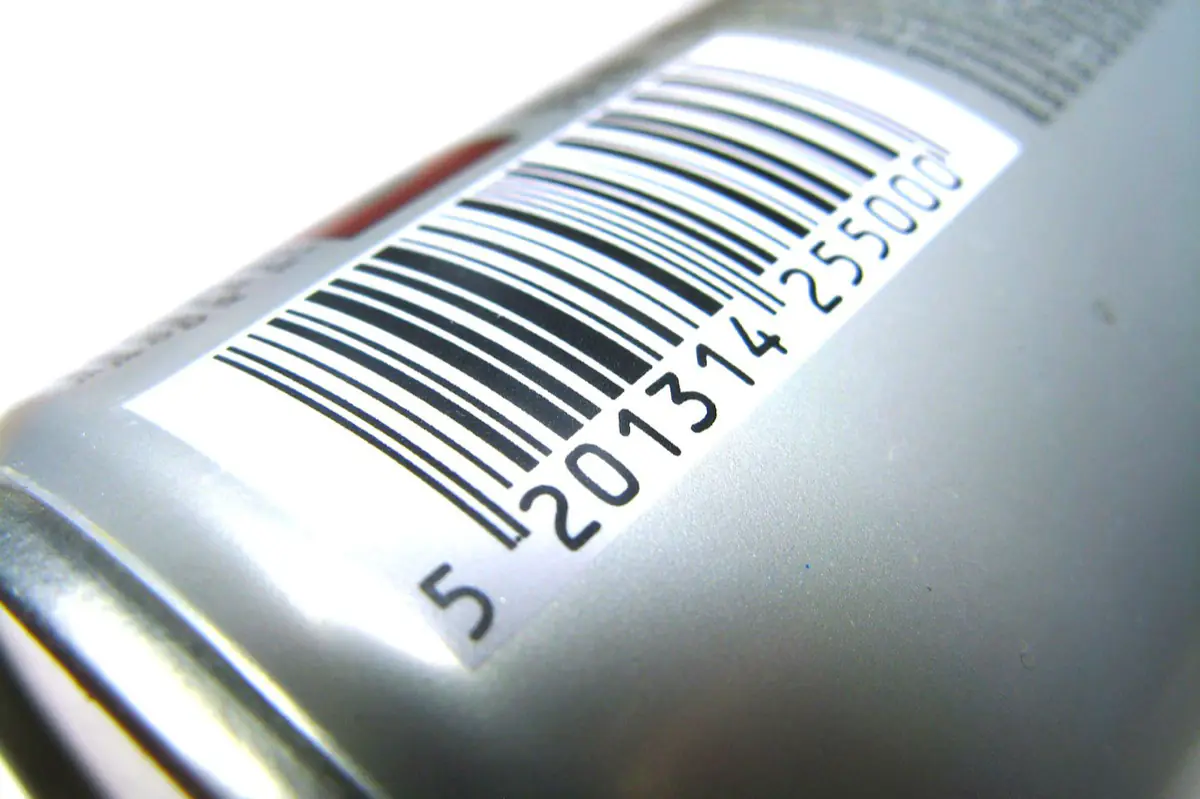 Photo: PDPhotos, Pixabay. Pixabay License
- A UPC is a universal barcode that identifies a product.
- GS1 is a not-for-profit organization, present worldwide, that makes sure these codes are unique. It’s regulated, and you have to pay for a licence.
- Outside retail or Amazon, an official UPC isn’t always necessary: you can make your own in-house barcodes.
- The exact way to create an in-house barcode from your SKU is still to be worked out with you.
Check GS1’s rules and costs with the organization before you commit.
Appendix: boxes for Amazon (FBA)
 Image generated with Nano Banana
- One identifier on the box: if there’s an original barcode, cover it completely with the required label.
- In my experience, Amazon is very particular about what it accepts: no box inside a sub-box, not too much padding. Products go straight into the brown cardboard box.
- Two stickers on a shipping box: the carrier’s, and the Amazon identification label, which acts as the box’s address.
- The full cycle: prepare, fill in the information online, document what goes in which box, follow up, and consolidate if the numbers don’t add up.
Amazon’s requirements change often: always check the current documentation before shipping.
To wrap up
Even with a simple system, a careless mistake happens fast. Imagine with no structure at all. A large, clearly visible SKU on the box is essential for everyone who receives it down the line, and it’s what makes fast sorting possible, especially under pressure. Take control of your identification instead of letting the supplier decide by default.
To go further: Preparing an order without mistakes, Receiving a new order properly, together.
This week, pick a box at random and check whether someone who doesn’t know the product could tell what’s inside in three seconds. After that, a short quiz is waiting in the interactive training.
Checklist
- Adequate, tested packaging, weather conditions considered.
- Large, clearly visible SKU on the box.
- Name, specs, quantity, and barcode present.
- Only one barcode visible: the old one is covered.
- Every packaging level identified (unit, grouping, shipping box).
- A separate barcode for cases and groupings.
- Special identifiers as needed: dangerous, fragile, urgent, do not separate.
- Platform requirements checked if the shipment is going to Amazon.
- Label supplied to the supplier right at the source.
Sources
- GS1 Canada: barcodes (UPC, ITF-14) (an ITF-14 code carries only the GTIN)
- GS1 Canada: barcodes for shipping containers (cases, SSCC) (case GTIN-14, logistics unit SSCC)
- Transport Canada: shipping batteries (lithium batteries, to confirm with the carrier)
- Transportation of Dangerous Goods Regulations (SOR/2001-286), Justice Canada
Want to see what your future training portal and my interactive procedures look like? Go ahead and try it. An email is required to log in; I’ll only use it to find out whether you enjoyed the experience.
Want the same thing for your team? 30 minutes, free. Book a meeting